

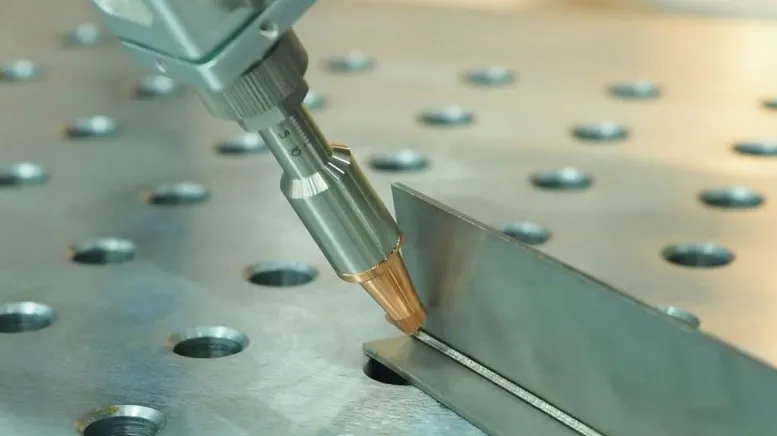
In mass production welding, efficiency is the difference between profitability and waste. Every second spent adjusting parts or correcting errors impacts throughput and quality. That’s why welding fixtures—specialized tools that hold and align workpieces—are vital to consistent performance.
The right types of welding fixtures not only prevent errors but also cut setup time, reduce rework, and make weld quality more repeatable. Whether you run small-batch prototyping or high-volume production, fixtures are essential to scaling efficiently without sacrificing precision.
Manual Fixtures
Manual fixtures rely on clamps, toggles, set screws, or hand-adjustable locators. They are the simplest and most cost-effective option.
- Best suited for: Prototypes, custom jobs, and small batches.
- Efficiency gains: Quick adjustments, minimal tooling investment, and lower upfront costs.
- Limitations: Less suitable for high-volume work where cycle consistency is critical.
Semi-Automatic Fixtures
Semi-automatic fixtures use pneumatic or hydraulic systems to speed up clamping and part alignment while the operator still handles welding.
- Best suited for: Medium production volumes where reducing operator fatigue and increasing repeatability is important.
- Efficiency gains: Faster load/unload cycles, more consistent clamping pressure, and improved safety.
Fully Automatic Fixtures
Fully automated fixtures integrate with robotic welding systems. They often include sensors, automated clamping, and part verification.
- Best suited for: High-volume, continuous production lines.
- Efficiency gains: Minimal human intervention, consistent welds, faster throughput, and reduced variability across cycles.
- Key advantage: Reliable enough to run around the clock with little downtime.
Modular & Reconfigurable Fixtures
Modular systems use base plates, grids, interchangeable clamps, and supports to adapt to different parts.
- Best suited for: Mixed production environments handling multiple product families.
- Efficiency gains: Quick changeovers, reduced need for multiple dedicated fixtures, flexibility for new product lines.
Custom / Dedicated Fixtures
Custom fixtures are designed for a single part or assembly, optimized for repeatability and durability.
- Best suited for: Long production runs of identical parts.
- Efficiency gains: Maximum precision, fastest setups, and the lowest per-part cost over time.
- Tradeoff: Higher upfront cost with limited flexibility.
Hybrid & Auxiliary Fixtures
These include positioners, rotators, and manipulators that complement traditional fixtures by improving weld access and orientation.
- Best suited for: Complex geometries or weld paths.
- Efficiency gains: Better torch access, reduced repositioning, and improved operator ergonomics.
Design Features That Enhance Efficiency Across Fixture Types
Regardless of fixture type, certain design elements significantly boost efficiency:
- Precision locating pins & stops for consistent part alignment.
- Clamping strategies that account for heat expansion and avoid part distortion.
- Durable materials like low-expansion alloys to maintain stability under heat.
- Quick-release mechanisms for faster part swaps.
- Integrated sensors to verify part positioning before welding.
These innovations ensure efficiency while minimizing waste and downtime.
Efficiency Impact Across Production Scales
- Low-volume shops: Manual and modular fixtures provide flexibility and low investment.
- Medium-volume shops: Semi-automatic fixtures balance repeatability with adaptability.
- High-volume production: Fully automatic and dedicated fixtures deliver maximum throughput and consistency.
The choice depends on your production needs and whether the efficiency gains justify the fixture cost.
How Denaliweld’s Types of Welding Fixtures Fit Into Efficiency Gains
Denaliweld offers a full spectrum of types of welding fixtures—from manual setups to fully automated and modular solutions. These fixtures are engineered to:
- Cut setup time with precision clamping systems.
- Integrate seamlessly with Denaliweld welding systems.
- Support long production runs with durable, adaptable designs.
Whether your operation requires flexibility for custom jobs or full automation for mass production, their fixture designs are tailored to help you achieve consistent weld quality and higher efficiency.
Conclusion
Welding fixtures are critical tools for manufacturers aiming to balance efficiency, quality, and cost. Each type—manual, semi-automatic, fully automatic, modular, or custom—offers unique advantages depending on production needs.
By choosing the right fixture strategy, you can reduce defects, shorten setup time, and improve throughput. And when paired with advanced welding systems like Denaliweld’s, fixtures become powerful multipliers of productivity and reliability.